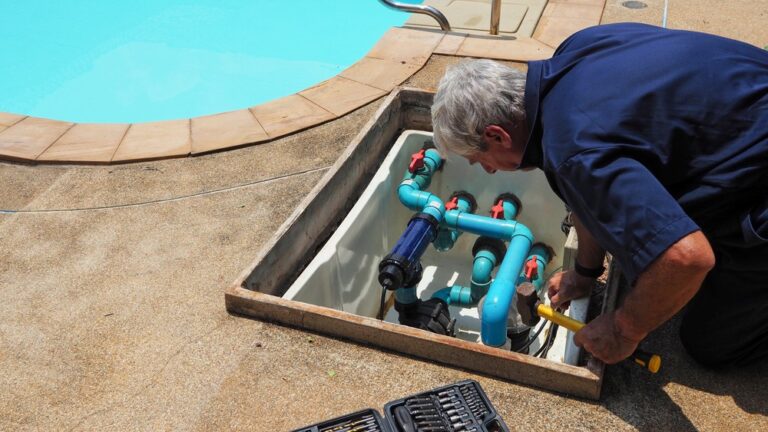
A pool pump should operate with a steady, low hum. Grinding, screeching, rattling, or whining sounds often indicate wear, airflow issues, or mechanical failure. Addressing unusual noise early helps prevent costly repairs, circulation problems, and equipment damage.
This guide explains the most common causes of loud pool pump noise and practical solutions homeowners can consider.
Why Pool Pump Noise Matters
A noisy pump can signal:
- Reduced water circulation and filtration
- Increased energy usage
- Impending motor or component failure
- Air leaks or suction problems
- Motor overheating
Early diagnosis can extend equipment lifespan and prevent full pump replacement.
Common Pool Pump Noises and Meaning
Grinding or screeching sounds
Likely cause: worn motor bearings
Bearings allow the motor shaft to rotate smoothly. Age, heat, and moisture can cause them to deteriorate, producing grinding or high-pitched squealing.
Fix:
- Bearings typically require motor disassembly or replacement
- In many cases, replacing the motor is more cost-effective
- Professional service is recommended
Rattling or vibrating noise
Likely cause: loose components or unstable mounting
Loose bolts, worn vibration pads, or an uneven equipment pad can create rattling during operation.
Fix:
- Tighten mounting hardware
- Ensure pump base stability
- Replace worn vibration pads
Loud humming without startup
Likely cause: capacitor or motor failure
A pump that hums but does not spin often has a failing capacitor or seized motor shaft.
Fix:
- Capacitor replacement may restore operation
- If the motor shaft is stuck, motor replacement may be required
Severity: Moderate to high
Gravel-like or cavitation noise
Likely cause: restricted water flow
Cavitation occurs when insufficient water reaches the pump, causing air bubbles to collapse inside the impeller.
Common causes:
- Clogged skimmer or pump basket
- Dirty filter
- Blocked suction lines
- Low pool water level
Fix:
- Clean baskets and filter
- Maintain proper water level
- Inspect valves and suction plumbing
Severity: Moderate
High-pitched whining noise
Likely cause: air leaks in suction lines
Air entering the system can create a whining sound and reduce pump efficiency.
Fix:
- Inspect pump lid O-ring for cracks or dryness
- Check suction plumbing connections
- Lubricate or replace worn O-rings
Experiencing persistent pump noise? Schedule a professional inspection to diagnose and repair the issue before it worsens.
Environmental Factors Affecting Pump Noise
In West Texas, environmental conditions can contribute to equipment noise:
- Dust and debris clogging baskets and filters
- Hard water causing mineral buildup
- Extreme heat accelerating motor wear
- Wind introducing debris into skimmers
Routine maintenance reduces these risks and helps maintain quiet pump operation.
When to Repair vs Replace a Noisy Pool Pump
Repair may be appropriate when:
- Noise is caused by debris or blockage
- Capacitor failure is identified
- Loose seals or minor components need replacement
- Pump is relatively new
Replacement may be better when:
- Motor bearings are worn
- Pump is more than 7–10 years old
- Repair costs approach replacement value
- Energy efficiency upgrades are desired
Modern variable-speed pumps operate more quietly and consume less energy than older single-speed models.
How to Prevent Future Pump Noise
Preventive practices include:
- Regular basket cleaning
- Filter maintenance
- Maintaining the proper water level
- Annual equipment inspections
- Protecting equipment from debris and weather
- Monitoring for early changes in noise
Consistent maintenance extends equipment life and improves performance.
When to Call Abilene Pro Pool Services
Professional service is recommended if:
- Noise increases over time
- Pump overheats or shuts off
- Circulation becomes weak
- Electrical or motor issues are suspected
- Cavitation or air leaks persist
Early professional intervention prevents additional system damage and reduces long-term costs. If your pool pump is making loud or unusual noises, professional repair can restore quiet operation and protect your equipment. Request a service estimate today.